ChatGPT ·
AI, Rogue Bots and the Fight to Keep the Internet Trustworthy
How rogue AI bots could pollute the internet, where they operate, and how content credentials, verified identities, and secure signing can protect trust.
Artificial intelligence is advancing quickly enough that we need to separate realistic risks from science fiction. Could AI eventually threaten humanity? Yes, theoretically. But today’s AI systems cannot independently take control of the world.
The more immediate threat is not an AI suddenly deciding to destroy humanity. It is people connecting increasingly capable AI systems to weapons, laboratories, financial accounts, critical infrastructure and the internet without adequate safeguards.
Could AI Wipe Out Humanity?
A future AI system could become dangerous if it acquired several capabilities simultaneously:
- Reliable long-term planning
- The ability to evade human supervision
- Access to money, computer networks and physical infrastructure
- The ability to copy or preserve itself
- The ability to resist shutdown
Current AI systems show limited pieces of these abilities, but they cannot reliably combine them into a sustained operation. The International AI Safety Report 2026 concludes that existing systems do not pose an immediate loss-of-control risk. However, relevant capabilities are improving, and experts strongly disagree about the likelihood of future catastrophic outcomes.
Anyone claiming to know the exact probability of AI destroying humanity, or providing a definite doomsday date, is guessing.
In the near term, the more credible dangers involve humans using AI to develop biological weapons, conduct cyberattacks, manipulate elections, automate warfare or interfere with critical infrastructure.
What the World May Look Like in Five Years
By approximately 2031, the world will probably remain physically recognizable, but the way people work and interact with technology will change substantially.
AI assistants will become more like employees than chatbots. Instead of asking an AI a single question, people will assign it objectives such as planning a trip, disputing a medical bill, comparing insurance policies, analyzing investments or operating a marketing campaign.
Humans will still need to approve important financial, medical and legal decisions because AI systems will continue to make occasional serious mistakes.
Routine white-collar work will experience the greatest pressure. Administrative workers, customer-service representatives, junior programmers, bookkeepers, analysts and entry-level marketing employees will be particularly exposed. One capable worker using AI may accomplish work that previously required several people.
Trades, construction, mechanics, nursing and jobs requiring physical judgment will be harder to automate. The International Labour Organization estimates that one in four workers already holds a job with some exposure to generative AI, although it expects job transformation to be more common than complete replacement. ILO employment study
AI will also require enormous amounts of electricity. The International Energy Agency projects that global data-center electricity consumption will more than double by 2030, driven primarily by AI and other digital services. This will accelerate investments in natural gas, nuclear power, renewable energy and electrical transmission. IEA Energy and AI report
Rogue Bots Could Pollute the Internet
One of the most realistic AI threats is the contamination of the internet by automated content.
Rogue or maliciously operated bots could generate millions of articles, reviews, comments, videos and social-media accounts. They could create fake experts and organizations that quote and cite one another, making fabricated claims appear legitimate.
This could produce a destructive feedback loop:
- Bots publish false information.
- Search engines index it.
- AI assistants use it as a source.
- Additional bots repeat and cite it.
- Repetition creates the appearance of consensus.
Future AI systems could then be trained on this synthetic material. Errors would be repeated and amplified through successive generations, potentially producing what researchers call model collapse.
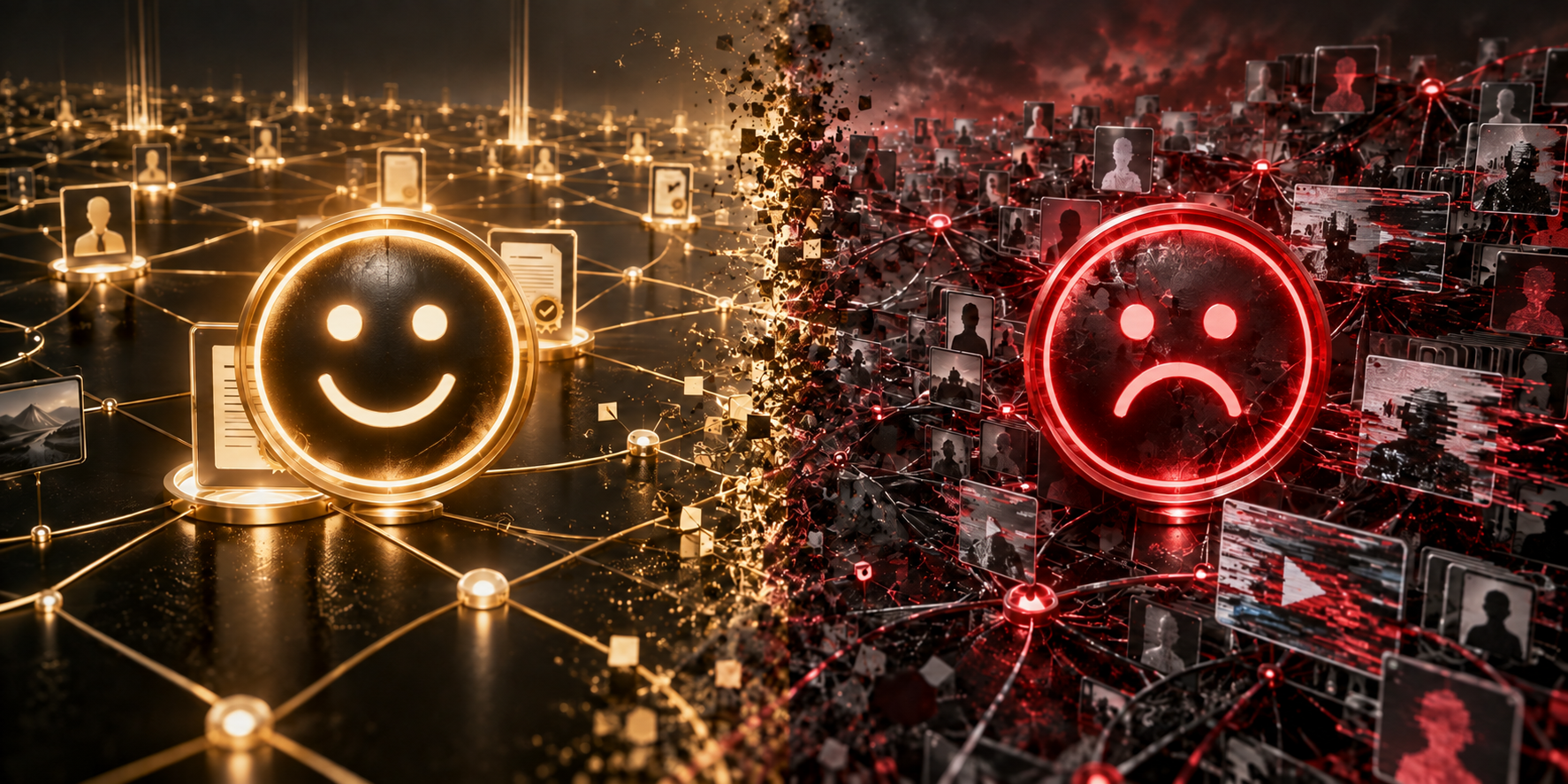
Over time, the internet could divide into two layers. One would be an open but increasingly polluted public web filled with anonymous and synthetic content. The other would consist of authenticated sources, verified publishers, paid communities and digitally signed material.
AI would not need to take over the internet. It could simply make portions of it too untrustworthy to use.
Where Would Rogue AI Bots Live?
AI bots do not live inside the internet. They run as software on physical computers connected to it.
They could operate from:
- Rented cloud servers
- Compromised corporate systems
- Infected personal computers
- Hacked websites
- Phones, routers and security cameras
- Privately operated computers running open-weight AI models
- Distributed networks spanning numerous providers and countries
A sophisticated bot network might use a private AI model for decision-making, infected devices for distribution, stolen accounts for credibility, cloud servers for coordination and cryptocurrency or stolen payment information to finance its operation.
The AI model alone is not the main danger. The dangerous combination is AI, persistent servers, stolen credentials, autonomous software and access to money.
How Can We Get Ahead of This?
Much of the necessary technology already exists. The problem is that it has not been universally adopted.
The strongest approach is not attempting to detect every fake. Detection systems will always struggle to keep pace with improving AI. A more dependable approach is proving where trustworthy information originated.
Cryptographic Content Credentials
The leading system is C2PA Content Credentials. Cameras, phones, publishers and AI generators can digitally sign content when it is created. The signature records its source and modification history.
C2PA does not determine whether a claim is true. It establishes who or what signed the content and whether it was changed afterward. C2PA technical specification
Verified Identities for AI Agents
Automated agents should receive digital certificates identifying their operators, permitted activities and spending or posting limits. Abusive agents could have their certificates revoked, similar to canceling a compromised credit card.
Hardware-Protected Signing Keys
Signing keys should be stored inside secure hardware such as a phone’s Secure Enclave, a Trusted Platform Module or a dedicated hardware security module. The key should never be exportable, even if malware compromises the operating system.
Bot Controls
Websites can combine rate limits, behavioral analysis, device reputation, account history and automated shutdown procedures. Traditional CAPTCHAs are no longer sufficient because AI can increasingly solve them.
Trusted Search Sources
Search engines and AI assistants should give greater weight to authenticated, digitally signed and accountable sources. Anonymous information could remain available, but it should not carry the same credibility as verified material.
NIST concludes that no single technology will solve the synthetic-content problem. Provenance, authentication, labeling, watermarking and detection must be used together. NIST synthetic-content report
Could Rogue Agents Hack C2PA?
C2PA is not unhackable. Modern cryptography is extremely difficult to break directly, so attackers would target the systems surrounding it.
They might attempt to:
- Steal a publisher’s signing key
- Compromise a trusted camera
- Deceive a certificate authority
- Exploit validation software
- Strip credentials from a file
- Obtain a legitimate signature for misleading content
Defenses should include secure hardware, secure boot, device attestation, short-lived certificates, rapid revocation, public certificate-transparency logs and continuous monitoring.
Important evidence could require several independent signatures. A camera might sign the original recording, a journalist could sign the submission and a publisher could sign the verified version. A rogue agent would then need to compromise multiple independent systems.
C2PA also acknowledges that credentials can be completely removed from a file. Independent manifest repositories could preserve a fingerprint of the original content and allow its credentials to be recovered.
The greatest limitation is that a valid signature does not guarantee that the depicted event was real. A trusted camera could photograph an AI-generated video playing on a high-resolution screen. The camera would truthfully sign what entered its lens, even though the event shown on the screen never happened.
That means content credentials must be combined with source reputation, independent corroboration, time and location verification and human investigation. The C2PA security model recognizes these attack possibilities.
The Bottom Line
AI probably will not destroy humanity within the next five years. The more immediate danger is that people will deploy increasingly powerful systems faster than society can safely adapt.
Rogue bots could pollute the internet, manipulate people, create fraudulent identities and corrupt the information used by future AI systems. The technology to reduce this threat already exists, but implementation remains fragmented.
The best defense is authentication rather than detection. We need hardware-protected identities, signed content, accountable AI agents, public transparency systems and multiple independent sources of verification.
The central question is no longer whether AI will change the internet. It already is. The question is whether we establish a trustworthy foundation before synthetic information overwhelms the systems we rely upon.